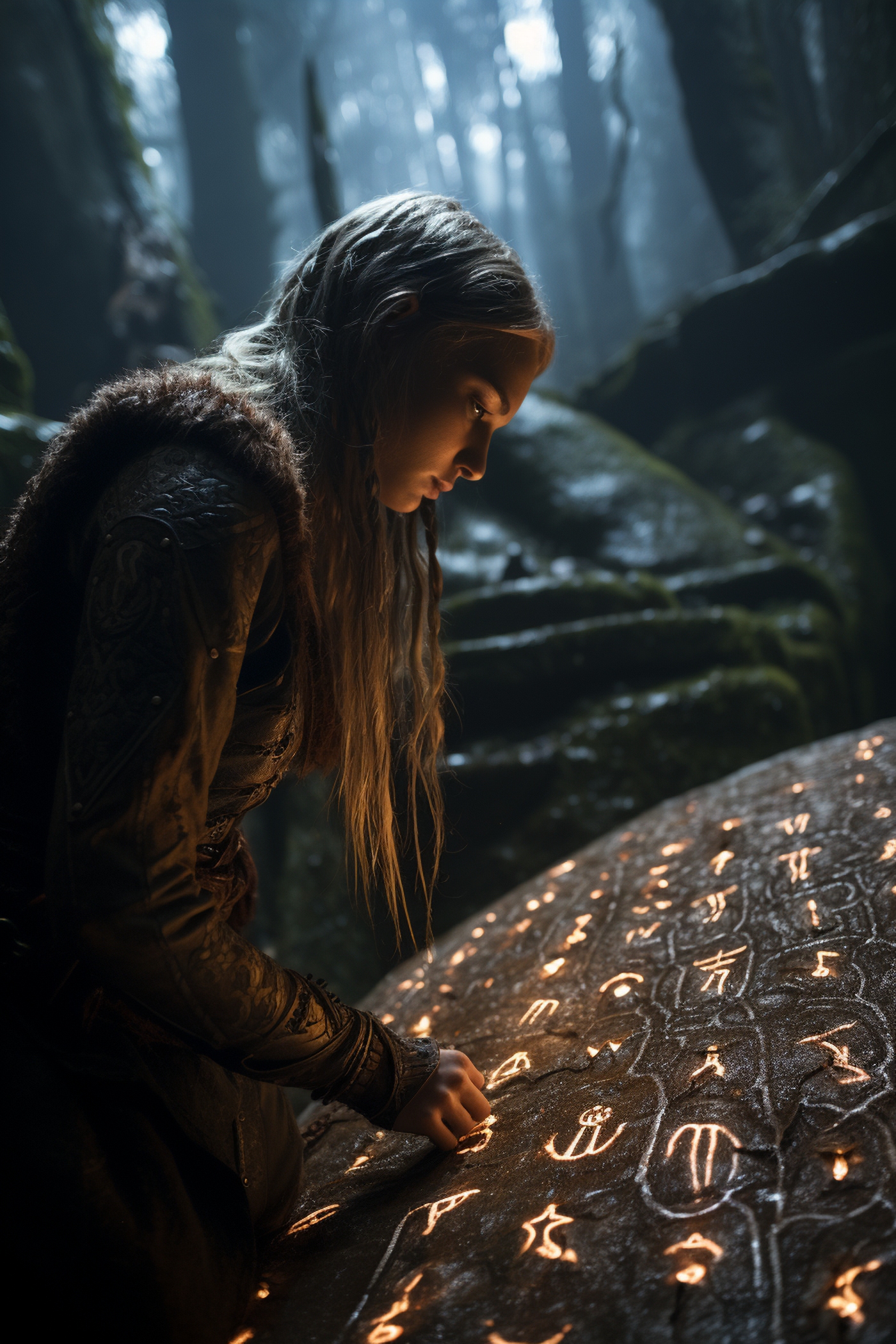

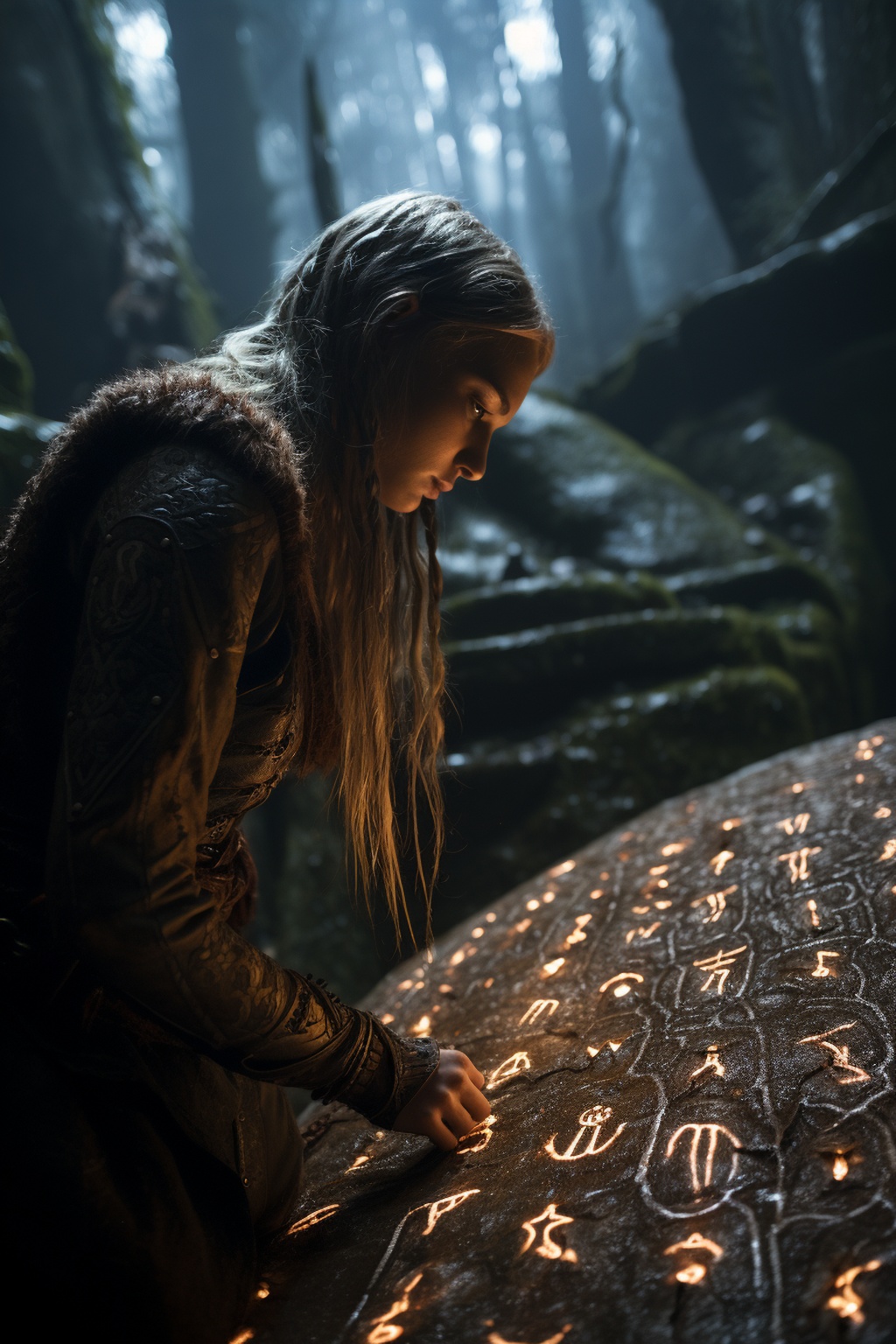
Eine weitere Magieform ist das Legen magischer Runen. Durch gewisse Runenformationen werden Zauber ausgeführt. Die Zauber bewegen sich meistens im Bereich der Geisterbeschwörung, der Elementarmagie oder des Schamanismus. Runenleger und Waldläufer beherrschen diese Art der Magie.
Die Runen werden zum Beispiel beim Los-Orakel der Nur'Tuk, oder bei den Ritualen der Mogowar-Barbaren benötigt. Man streut mit Runen bezeichnete hölzerne Stäbchen, sogenannte Buchenstäbe (daher das Asgal-Wort Buchstabe) auf ein weißes Tuch. Manche Stämme verwenden auch kleine runde Plättchen die kunstvoll mit der jeweiligen Rune geschmückt sind. Darauf werden auf gut Glück drei dieser Stäbchen aufgehoben und gedeutet. Dies wird nacheinander dreimal durchgeführt.Die Deutung wird meist, unter Berücksichtigung der Runennamen und ihrer Bedeutung, in metrischer Form (in alliterierendem Spruch) wiedergegeben.
Die Verwendung der Runen zum Zauber ist besonders im Norden Tirakans bezeugt. Es gibt Zauberrunen für bestimmte Zwecke, so Siegrunen, Bierrunen, Bergerunen (zur Geburtshilfe), Seerunen (zum Schutz der Schiffe), Rederunen (um klug zu sprechen), Löserunen (bei Gefangenschaft), Runen zum Besprechen (Stumpfmachen) der Schwerter und dergleichen.
Kulturelle Unterschiede
Die Unterschiede zwischen den Stämmen sind sehr gering, so wird bei den Nur'Tuk ein O an Stelle des A benutzt. Teilweise unterscheiden sich zwar auch die eigentlichen Runen ein wenig aber wie von einem Schamanen der Mogowar bestätigt wurde ist eine Verständigung zwischen den Systemen unter den Runenlegern durchaus möglich.
Der Thoraner Magie-Historiker Stephan von Blumen berichtet in seinem Standardwerk „Runenmagie der Tirakanschen Stämme im Jahre 200 gar: „ Und es begibt sich gar regelmäßig alle 4 Jahre das sich alle Runenleger jeglicher Kultur, ob Barbar oder anderweytiger Tribalist und sogar einige welche doch eher dem zivilisatorischen Zweige der Völker Tirakans zuzurechnend seyn am großen Wurk Shub teilnehmen. Dieses eigenartige Wort bezeichnet ein dreitägiges Treffen der Runenleger auf dem in schon fast akademischer Art und Weise das Wesen der Rune diskutiert und vertieft wird.“
In Hadewald und in Yavon erlebte das Runenlegen ab dem 6. Jahrhundert einen Aufschwung. Die aus Yadosien stammenden Karten der Wahrsager wurden aufgrund der mittlerweile festgefahrenen Situation und der Usurpation Yadosiens durch dunkle Mächte teilweise durch die Runen der Barbaren ersetzt da diese als „ursprünglicher und reiner“ grade bei den nationalistischen Kräften dieser Länder galten. In dieser Bewegung spielten neben den Resentiments gegen die „Zwiebelfresser“ (Thoraner Schimpfwort für Yadosier) auch verklärende und romantisierende Gedanken eine Rolle welche an alte längst vergangene Zeiiten anknüpfen. Mittlerweile (Anm. ab dem 7. Jahrhundert) gilt es auch in vielen Salons der Metropolen Tirakans als Schick sich die Zeit mit Runenlegen zu vertreiben.
Mythologische Ursprünge
Die Nur'Tuk haben eine in ihrer Kultur tief verwurzelte Sage welche den Ursprung der Runen erklärt. Ihr Kulturheros Nur, den einige Religionswissenschaftler für einen Avatar, also eine Verkörperung des Algor halten (auch wenn von Algor nichts bekannt ist von einem Hang zum Unbekleidet sein wie es von Nur berichtet wird) soll die Runen empfangen haben. Hier ein kurzer Text-Ausschnitt, wieder aus dem Meisterwerk des Stephan von Blumen:
„Und es begab sich das Nur durch die Steppe wandelte. Er jagte den Ur-Hirsch dem er schon seit Aeonen auf der Fährte war. Er war bereits sieben Monde diesem Tier auf der Spur und bestand nur noch aus dem Willen zur Jagd. Morgens stieg er auf von seinem Lager, folgte den Tag über den Spuren des heiligen Tieres, und am Abend, wenn er erschöpft war, fiel er in das dunkle Lager des Steppenbodens. Aber am 7. Tage des 7. Mondes war die Spur frischer als die vielen Tage zuvor. Leise schlich sich Nur zu einer Quelle in einem kleinen Hain in der Steppe.
Dort sah er den Hirsch. Nur noch ein Speerwurf war zwischen ihm und dem Boten der Götter. Doch als er aushohlte um den tödlichen Wurf zu tätigen starrte ihn der Hirsch in das Antlitz. Zwischen seinem Geweih bildete sich das Zeichen der Sonne, die glühende, allhelle Kugel. Nur war starr vor Ehrfurcht. Und in diesem Moment sprach der Hirsch:“Heil dir! Sei gegrüßt Nur. Du der mir länger gefolgt ist als jeder andere tapfere Krieger einer jeden anderen Sippe. Du bist wahrhaftig wie ich. Frei springst du durch die Steppen, auf der Suche nach Nahrung. Ungebunden bist du wie ich. Wir sind eins. Und wenn du mein Leben nehmen musst dann werde ich keinen Greuel hegen denn nur du bist es wert durch mich am Leben gehalten zu werden. Wir bedingen uns.“. Nur war verwirrt.
Ein Hirsch sprach zu ihm? Wie konnte das sein? Und das majestätische Tier schien ihn zu kennen! Nur legte den Speer zur Seite und ging auf den Hirsch zu. „Heil dir oh Gevatter Hirsch!“ sprach er und fuhr fort „mich deucht Ihr kennt mich? Und ich habe das Gefühl ich kenne euch.“. Der Hirsch antwortete „Ja ich kenne dich. Denn du bist ich. Durch mich wirst du Erkenntniss finden wer du bist. Töte mich!“. Nur widerstrebte diese Idee. Denn dieses Tier war kein Tier, es war ein Geist der Natur. Oder gar ein Gott? „Wirf den Speer“ forderte der Hirsch. „Aber ich kann doch nicht jetzt wo ich weiss das ihr ein empfindsames und intelligentes Wesen seid!“ warf Nur ein. „Dies ist der Lauf der Dinge. Gejagt werden und jagen. Ich bin du. Ich bin dein Opfer.
Und dadurch bist du dein Opfer selbst geworden. Was kann man mehr verlangen als das sich ein Mann selbst opfert?“ erwiderte der Hirsch. Nur überlegte. Schweren Herzens nahm er seinen Jagdspeer, zielte und tötete den Hirsch. Kein Laut drang aus dessen Kehle. Überwältigt von dem Erlebnis ging Nur zu dem nun toten Tier und zerlegte es. Er bedankte sich bei Gevatter Hirsch und nahm das Gehirn des Tieres in rituellem Bewußtsein zu sich wie es oft Brauch der Jäger war. Nur kurze Zeit nachdem er dieses tat wurde ihm in einem Traum von diesem Hirsch das Geheimnis um die Runen offenbart und er lehrte es jene die er für würdig befand.“
Interessant in diesem Zusammenhang ist das auch die Mogowar eine beinahe ähnliche Geschichte über den Ursprung der Runen erzählen. Der einzige Unterschied ist der, dass an die Stelle von Nur M´Wharar, der Erste Schamane des Volkes tritt und dieser einen Steppenhund jagt.
Runenmagie in der Anwendung
1.Divination
Die bekannteste Anwendung der Runen ist die Divination, also das Schauen in Vergangenheit, Zukunft und Gegenwart. Hierfür werden von einem Schamanen oder Priester oder Zauberkundigen, je nach kulturellem Hintergrund, mehrere meist drei Runenstäbe oder Runensteine auf ein Tuch geworfen. Der Seher der sich in Trance befindet wird dann eine Antwort auf seine Frage durch die Runen gegeben. Diese Antwort ist meist nicht eindeutig und wird in kurzen Versen vorgetragen. Denn was der Fragende dann aus dieser Antwort macht bleibt ihm überlassen da die Zukunft nicht komplett geschrieben ist denn die Menschen und andere Kulturschaffenden besitzen etwas sehr wichtiges, das chaotische Moment des freien Willens.
2. Segen und Fluch
Dieses Feld ist sehr weit verzweigt. So können Runen auf ein Schwert gebracht werden um seine Schärfe und seine Härte zu fördern. Auch das Gegenteil kann erzeugt werden wenn auch dieses als „stumpf machen“ bezeichnete Ritual wegen seiner Heimtücke nicht allzu gern gesehen wird. Doch nicht nur Waffen im eigentlichen Sinne sind für solche Zwecke geeignet. Auch Werkzeuge des alltäglichen Lebens werden von den Völkern welche hochnäsig von den sogenannten Zivilisationen als Barbaren bezeichnet werden durch Runen gesegnet.
So wird ein Schmied seinen Hammer mit der entsprechenden Rune segnen (eine Parallele zu der Hammersegnung einiger Zwergenvölker), ein Bauer seinen Pflug und ein Jäger seinen Speer und seine Pfeile. Im Gegensatz zu vielen anderen Anwendungszwecken ist diese Verwendung der Runen eine Praxis welche auch von dem „Profanen“ angewendet wird. Zu diesem Kapitel gehört auch die Körperbemalung einiger Stämme. Oft sind in den Mustern kaum mehr die eigentlichen Runen zu erkennen aber der Kundige kann sie erahnen und so auf ihre Funktion schließen. Oft werden diese Runen ineinander in ein geometrisches Muster gebracht. Diese Muster werden wenn sie weniger komplex sind als Binderunen bezeichnet, wenn sie komplexer werden ist ihre Ähnlichkeit mit der in der Hermetik aber auch in der schwarzen und weißen Magie bekannten Sigille mehr als deutlich. Viele Magie-Historiker und Magotheoretiker sehen in diesen gar den Ursprung der Sigillenmagie welche doch als Basis für die Aufzeichnung vieler Zauber vieler Schulen gilt.
3. Heilung
Eng mit der Segnung verwandt aber ein spezielles Untergebiet welches als eigenständiger Bereich von vielen Heilern der Stämme gelehrt und praktiziert wird. So werden bei schweren Geburten, Krankheiten und Verletzungen Runen benutzt um die Heilkräfte und das Bewußtsein des Patienten zu stärken. Nicht nur für Menschen und andere Kulturschaffenden, auch für Tiere wird diese Technik angewandt. Obwohl es sich bei Runen auch um Lautzeichen wie bei den anderen Buchstabensystemen handelt haben die einzelnen Runen auch eine eigentliche Bedeutung. So ist die Rune welche dem Asgal „F“ entspricht, das sogenannte Fehu, gleichzeitig auch das Wort für Vieh. In einer Segnung könnte dies für Fruchtbarkeit stehen, in einer Heilung dann natürlich verwendet werden bei Geburten von sowohl Mensch als auch Vieh.
4. Elementare Kräfte
Die fünf Elemente haben ihre Entsprechung in den Runen. So ist es einem erfahrenen Runenmagier möglich diese durch die Runen zu lesen aber auch zu beeinflussen. Am bekanntesten sind in dieser Hinsicht die Runenmagier der Nur'Tuk des Stammes der Asa. Sie sind ein auf den Flüssen und Seen ihrer Heimat lebendes Nomadenvolk und haben in ihren Reihen stets Runenkundige welche in der Lage sind die Elemente Wasser und Wind zu beeinflussen oder wenigstens ihre Absicht zu erkennen was ihr Leben oft einfacher macht.
5. Mischformen
Die Welt der Runen ist nicht so strukturiert wie es den Anschein hat, auch in dieser Auflistung. Die Runen sind keine Werkzeuge, sie SIND. Sie verkörpern die allen Dingen, auch den Titanen, Göttern ja sogar den Verrätern und Dämonen innewohnenden Kräfte. Sie sind ein Abbild des Universums. Eine Ebene der Abstraktion welche in die jeweilige Realität des Anwenders gezogen wird und so ihre Auswirkungen und Effekte hervorruft. Ein Runenkundiger kann also selbst neue Formen entwickeln wenn er sich auf die Runen und auf sich selbst verläßt.
Die Grenzen sind grenzenlos. In Kreisen der Magietheoretiker haben sich viele Meister bereits vor langer Zeit vom barbarischen und archaischen Ruf der Runenmagie verabschiedet und studieren sie voller Interesse. Doch immer sind die Runen ein zweischneidiges Schwert denn wie heist es doch in dem altüberlieferten Lied des Nur:“ Was wirst du finden befragst du die Runen, die hochheiligen welche Titanen schufen, Schamanen schrieben? Das nichts besser sei als schweigen!“